
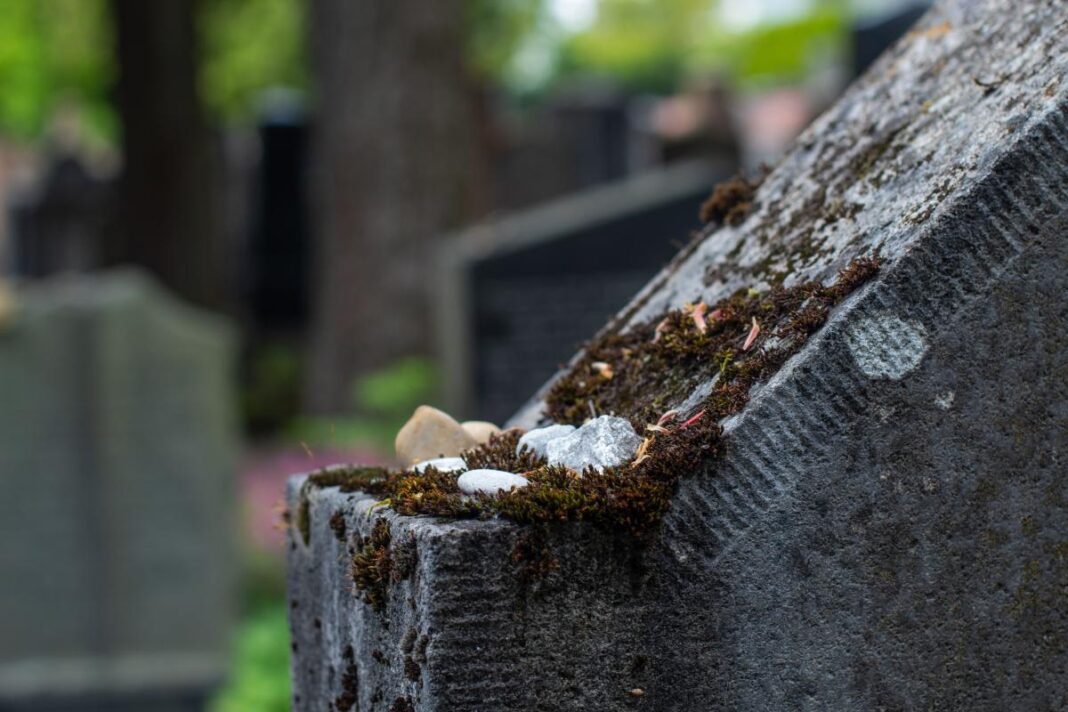

Photo: Pexels
Bosnian law does not provide for a special procedure for the burial of persons convicted of genocide, crimes against humanity or war crimes. The remains are handed over to the family, as in any other case. However, it is at this point that the question arises – what happens when a grave ceases to be a place of private remembrance and becomes a space for political mobilisation, revisionism and glorification of crime?
Author: Sanela Karaica
From grave removal to space repurposing
The case of Rudolf Hess is often cited as one of the most famous examples of state intervention aimed at preventing a burial site from becoming a symbol of extremist gatherings.
Hess was a leading member of the Nazi Party and one of Hitler's closest associates. He committed suicide in Berlin's Spandau prison in 1987, where he was serving a life sentence. Despite his criminal past, his wish to be buried in the family grave in the Bavarian town of Wunsiedel was granted.
However, this soon proved to be a problematic decision. For years, the city had been facing gatherings of thousands of neo-Nazis who paid tribute to the criminal and organised marches in spite of bans. As a result, in 2011, the German authorities took decisive action: the grave site was removed and the headstone dismantled. The mortal remains were exhumed and cremated, and the ashes were scattered at sea, as the authorities were keen to avoid a new place of pilgrimage. Along with additional legislative measures, the strategy proved successful.
Germany is not the only country to have tried to prevent burial sites from becoming space for the political rehabilitation of criminals.
Jovana Kolarić, a researcher of the Humanitarian Law Centre in Belgrade, explains that international practice recognises different ways of restricting the public glorification of criminal policies, but that these restrictions do not generally refer to the right of a family to a private burial and mourning. The focus is exclusively on preventing public space or a memorial from becoming a place for the glorification of crimes.
– Spain is a good example of this. Following the exhumation of Francisco Franco from the former ”Valley of the Fallen”, the site is being redefined as a place of remembrance for the victims of the Civil War and the dictatorship. Spanish law explicitly prohibits political gatherings and the glorification of the war, the dictatorship and their protagonists at the site. The essence of such measures is not about punishing the family or abolishing the right to burial. It is about the fact that a state may not maintain a public memorial space as a space of pilgrimage and political rehabilitation of authoritarian or criminal legacy, stresses Kolarić.
On the other hand, Italy mostly tolerates neofascist gatherings at the grave of the former dictator Benito Mussolini. Although Italian law formally prohibits the glorification of fascism, it is frequently not applied in practice in a consistent manner.
The Hague did not follow Nuremberg
Dino Abazović, PhD, a full professor at the Faculty of Political Sciences of the University of Sarajevo, recalls historical examples of the anonymisation of burial sites – locations that remained completely unknown to the public, as was the case with convicted Nazis after World War II.
The 1946 conviction of Nazi leaders in Nuremberg did not end with their execution by hanging. The court was aware that their graves could become pilgrimage sites for Neo-Nazis. For this reason, it decided that the bodies should be cremated and the ashes scattered in complete secrecy.
However, half a century later, the International Criminal Tribunal for the former Yugoslavia (ICTY) in The Hague did not follow the practice of erasing traces. The location and manner of burial after the death of suspected or convicted war criminals are decided by their families. The same procedures are also prescribed by Bosnian legislation.
– The Law on the Execution of Criminal Sanctions of Bosnia and Herzegovina does not authorise prison administration bodies to decide on the place of burial or the method of marking of a deceased person's grave solely on the basis of the fact that the person was convicted of a specific criminal offence – we were told by a representative of the Ministry of Justice of Bosnia and Herzegovina.
When a private burial becomes a public ritual
The right of a family to bury and mourn their member is undisputed. However, a problem arises when a private burial turns into a public ritual of justifying, relativising, or glorifying a crime.
– When the state, political parties, associations or public institutions turn a funeral, grave or death anniversary into a symbolic event to honour a person convicted of war crimes, it is not only an individual who is glorified, but also the act for which he was convicted – warns Kolarić.
However, graves are often not even necessary for mass gathering and maintenance of a collecitve cult in the countries of the region. This is best demonstrated by the examples of Slobodan Praljak and Dragoljub Draža Mihailović.
Praljak committed suicide in a Hague courtroom during the public sentencing. In accordance with his wishes, he was cremated in Zagreb in the presence of his family. Although he had no grave to become a physical place of gathering, his personality and (mis)deeds are celebrated on murals in city streets, with at least two new ones appearing in Mostar over the past few months.
A similar story is that of the Chetnik commander Mihailović, who was sentenced to death and executed in 1946. The exact location of his execution and grave remains unknown even eighty years later, but this has not prevented a cult from emerging and being maintained. His followers, who are part of the Ravnogorski movement, pay tribute to him in Višegrad every year, and the film ”Đeneral” was recently screened for the first time.
– A grave may be symbolically useful, but it is not essential. The location of Draža Mihailović's grave is unknown, yet the cult related to his name still exists. It is maintained based on political instrumentalisation of the past, the selective presentation of facts and narratives that omit or relativise historical responsibility. A grave can be a place of gathering, but the cult is most often constructed at institutions, the media, school programmes, public ceremonies and political discourse. In Serbia, the faces of those convicted of war crimes have also been commemorated by military or cultural institutions, which shows that glorification does not necessarily have to be tied to the burial site itself – concludes Kolarić.
Manipulation of transgenerational memory
Professor Abazović points out that by treating war criminals as ”martyrs” and ”saints” defending their nation, nationalists retroactively legitimise the crimes committed.
– By visiting their graves and holding celebrations, they territorialise the sites of political domination and convey a direct message to the victims that not only they are not welcome, but also that the previous ideological order is still in place – states Abazović.
He also emphasises that the celebrations and commemorations of convicted war criminals undermine the effects of transitional justice, which is based on societal acknowledgement that crimes were committed, something that is unacceptable in a civilised world.
– The attitude toward burials, graves, and places of burial and commemoration of individuals convicted of war crimes represents a huge challenge not only for post-conflict societies like ours, as it directly impacts both the areas of transitional justice and the field of national and international law. Such practices outline the fields of collective memory, political manipulation, and the right of victims to truth and dignity – says Abazović.
He particularly emphasises that the focus should be on the victims and survivors, who are retraumatised by such practices.
– Those engaging in such practices are not only building a political mythology, but also directly manipulating transgenerational memory, which is a ”poisonous” legacy for the future. Finally, the public glorification of convicted war criminals makes it impossible to trust the international and domestic judicial institutions that delivered the judgments in these specific cases and enable a possible future state of ”impunity” – the professor believes.
Jovana Kolarić points out the importance of the state's attitude toward this issue:
“The attitude towards those convicted of war crimes also shows the attitude towards the crimes themselves, towards the victims and the political ideas that made the violence possible and acceptable. A democratic state has the right, but also the responsibility to act in accordance with the values on which it is founded. If a state wishes to make a clear break from the wrong policies of the past, it may not simultaneously participate in promoting people who committed crimes. When criminals are presented as heroes, it tells the victims that their suffering cannot be acknowledged and that the facts of what happened are not important.”
Professor Abazović also outlines what needs to be done to combat these phenomena, and one of the primary tasks is the strict implementation of the Law on the Denial of Genocide, the Prohibition of the Glorification of War Crimes and the Prevention of Spreading National Hatred and Intolerance. Furthermore, a daily focus on the victims is essential, along with state and societal support for commemorations at places of suffering, and intervention in educational programmes and the media to build a healthy and truthful narrative.
Even state officials and religious dignitaries attend funerals of criminals
Unfortunately, the current situation is such that criminals are celebrated at public institutions and parliaments, and schools and dormitories bear their names. There is no shortage of political and media support for them during their lifetime and even after their death. Their funerals are attended by officials and religious dignitaries, and the ceremonies are often accompanied by full military honours.
Unlike Germany, where neo-Nazi gatherings have for years been marginalised and kept under state surveillance, in parts of the post-Yugoslav space, convicted war criminals are publicly glorified. For his reason, the key issue is not where criminals are buried, but rather whether the state distances itself from the crimes or participates in their symbolic rehabilitation after their death.
The text was co-authored in cooperation with Pro Peace BiH.