

Photo: Impuls
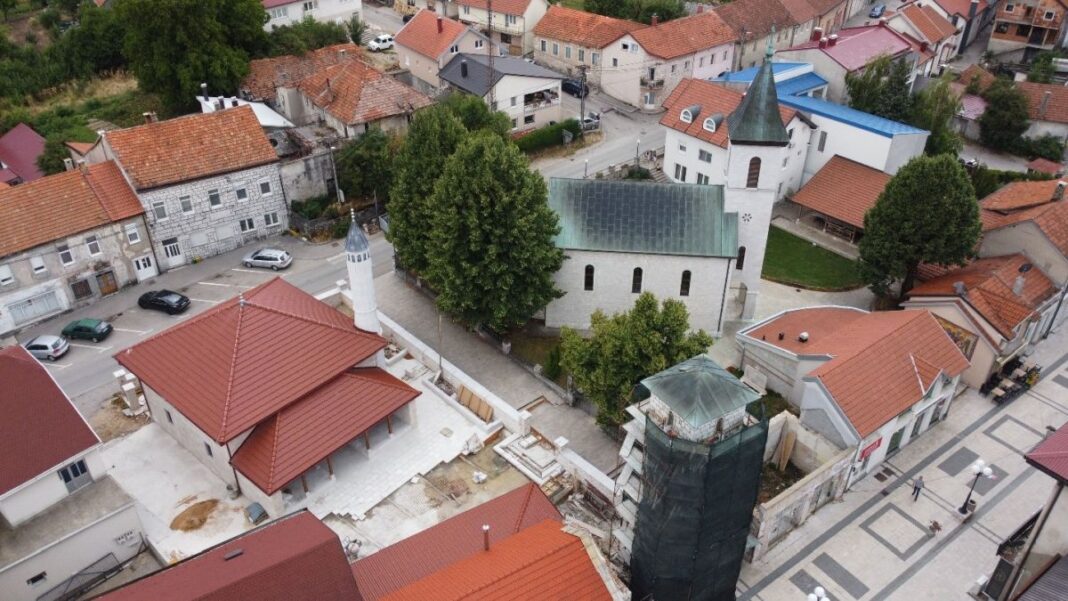
Built at the beginning of the 16th century, completely destroyed at the beginning of the war in the 1990s, the Dugalića Mosque at the centre of Nevesinje was reconstructed.
Author: Miljan Kovač
The last in a series of 12 destroyed mosques in this municipality should be officially opened as soon as the next summer. Final works are underway.
Numerous believers and guests are expected at the opening.
The reconstruction of this building means that Nevesinje will get back one of its century-old symbols.
Unfortunately, the reality shows that it does not guarantee that its former inhabitants and their descendants, who were born in some other cities they fled to, when their religious buildings and their homes were destroyed, will come back.
Compared to 20% of the total pre-war inhabitants of this municipality, the Bosniak community today consists of only 40-50 households of elderly persons in the surrounding villages. There are almost none of them in the town itself. A precise number is difficult to obtain, since it varies – in summer and during holidays, the former inhabitants and their descendants arrive from Mostar, Sarajevo or from abroad.
To what extent the displaced persons truly return to Nevesinje is best shown by the devastating data that no returnee child goes to primary school at this municipality, which illustrates the situation much better than census data. During the last local elections, a Bosniak was elected to the assembly of the municipality for the first time after 24 years.
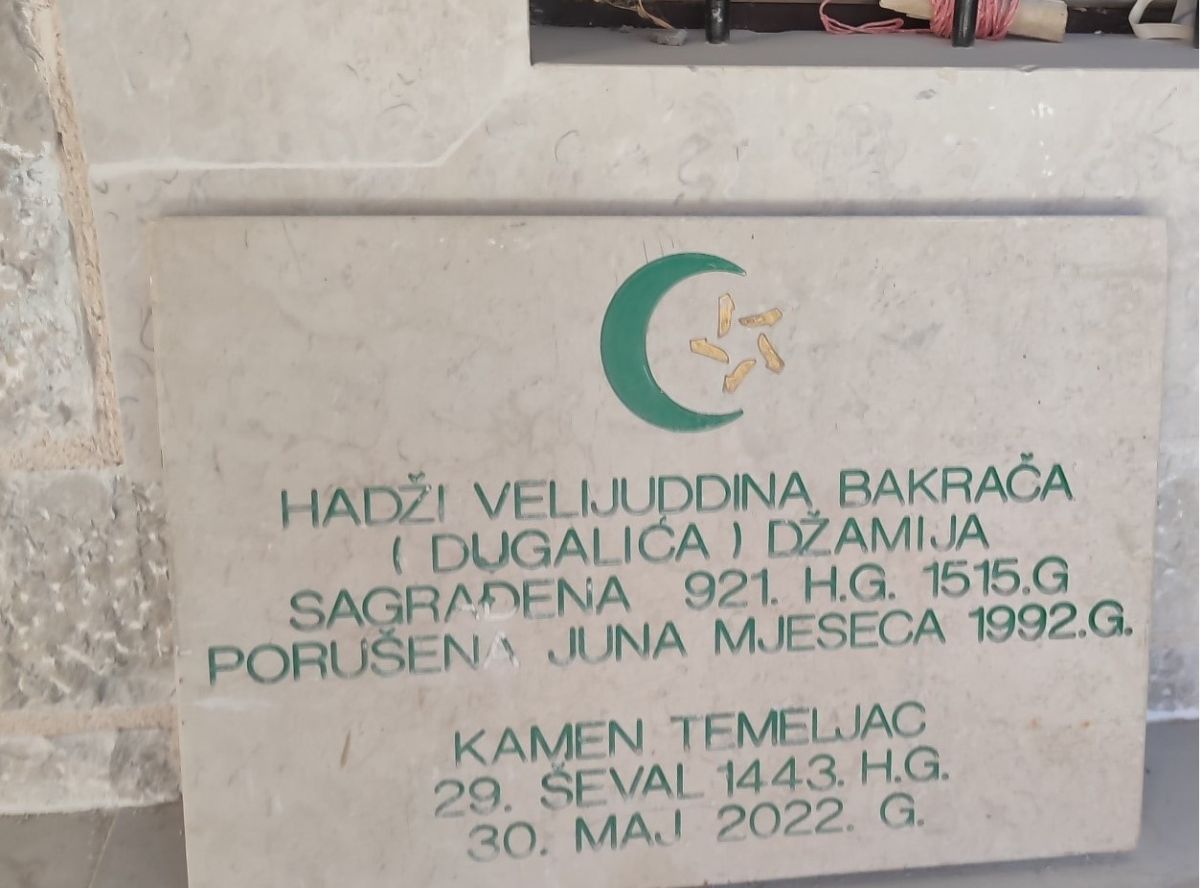
Photo: Impuls
Reconstruction and hope
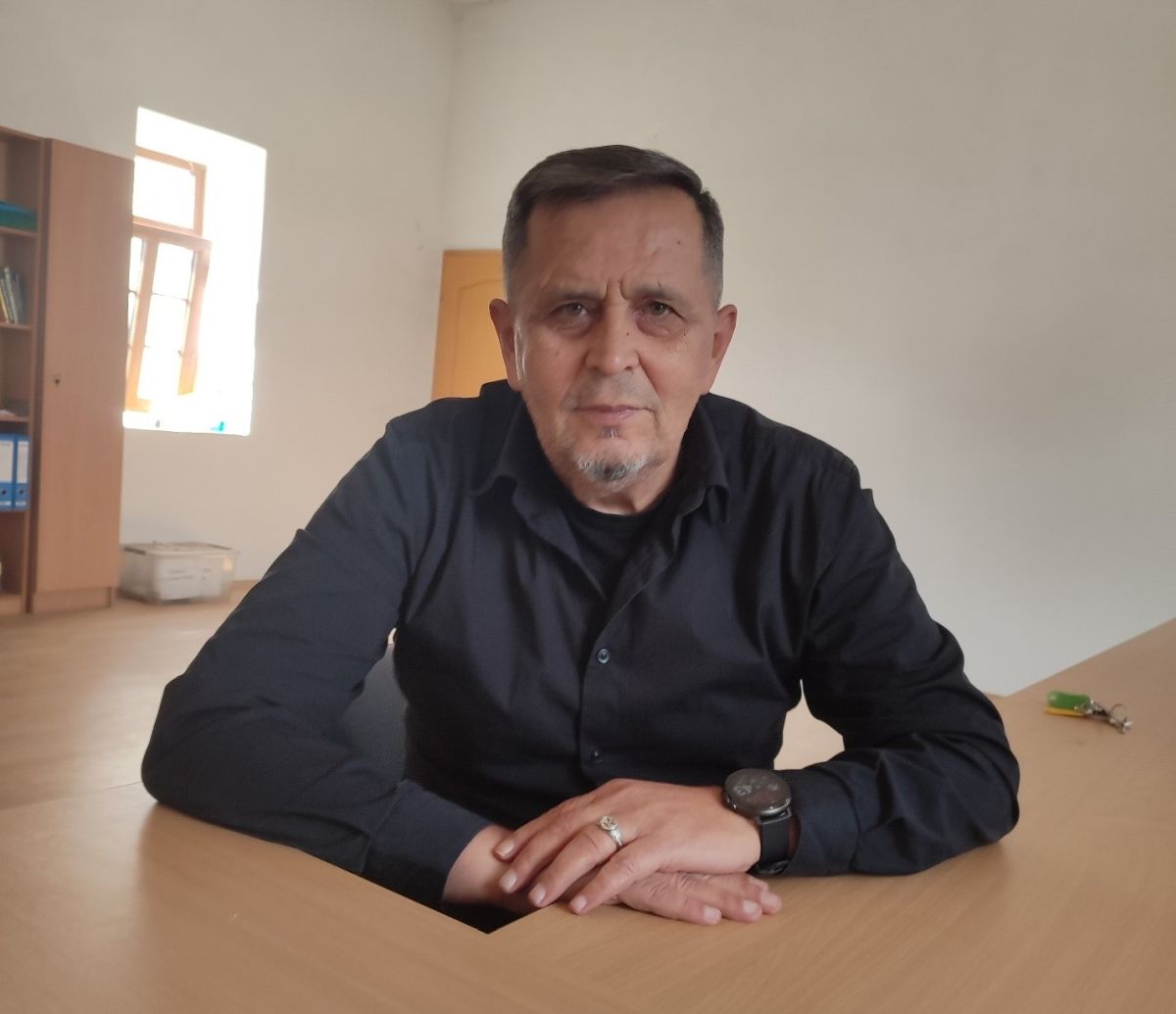
Mehmed Efendi Čopelj has been an imam in Nevesinje since 2007. He left the town as a boy to go to school elsewhere, and then the war started. He was among the first returnees to come back to his native town and today he is sure that he could not feel better anywhere else.
”I was born here, I took my first breath here, I feel at home here”, he says for Impuls.
He followed the reconstruction of most buildings of the Islamic community in this municipality.
Before the Dugalića Mosque, Careva and Čučkova mosques were reconstructed, with the latter having been destroyed and neglected.
Unfortunately, there are few persons to pray in these mosques.
All these are consequences of ethnic cleansing, committed mostly in the summer of 1992, when this municipality lost all its non-Serb inhabitants.
According to the data of the association ”Povratkom za Bosnu i Hercegovinu”, 305 Bosniaks and 14 Croats were killed in Nevesinje in June and July of 1992. Among them were also 26 children.
It is still unknown where the graves of a third of victims are located. Only part of the crimes have been prosecuted. Although the Prosecutor's Office of Bosnia and Herzegovina launched an investigation a long time ago, nobody has been held accountable for the destruction of religious buildings.
Neighbours
Today, there are no issues among neighbours, says Čopelj Efendi. On the contrary, he points out that the security and safety is excellent. He also says that since the arrival in this town and the beginning of reconstruction, he encountered only support and understanding.
When he came to the devastated Čučkova Mosque for the first time with several workers and with the intention to initiate the reconstruction, he faced the first obstacle – the lack of electricity and water that were necessary for the reconstruction. And who else might one ask for help than the first neighbour. He says that he entered the nearby café with apprehension, with the intention to ask the owner to grant them access to water and electricity, that he would pay, if needed. ”Do not ask me this ever again”, the owner of the café said. This was followed by a moment of silence that seemed too long – ”One never asks a neighbour something like that, it is implied. You know where the water and electricity are, help yourself”, the neighbour answered encouragingly. After this, they even had coffee together. And they still regularly have coffee together. His neighbour also frequently sent some coffee to the construction site.
Mehmed Efendi Čopelj; Foto: Impuls
There have also never been any issues with the local authorities.
However, as soon as things seem idyllic for a moment, we have to face the bitter truth – there are no returnees. In the town itself, there is not even one returnee family. Out of the 634 Bosniaks who lived in the town before the war, only two elderly women live in the town itself, but they are not returnees.
The situation is somewhat better in the villages in the northern part of Nevesinjsko polje (Gornje polje). According to the 1991 census, out of a total of 14,448 inhabitants of this municipality, 3313 were Bosniaks.
”Members of the older generation have mostly died, and younger returnees come back from time to time, especially during summer holidays and when diaspora members arrive. There are very few returnees in these villages during the rest of the year, and there are none of them in the town. However, what I can say is that Nevesinje is one of the safest locations for returnees – there have never been any verbal or physical incidents here. When our people come to the town, we engage in religious activities. It has never happened that someone insulted us or gave us a look. People greet us and the relations are good”, says Čopelj Efendi.
Nobody can say to what extent the reconstruction of religious buildings will encourage persons to come back to their homes. What cannot be denied is the fact that reconstruction means at least partial addressing the injustice and rebuilding trust of the returnees.
”When it comes to relations with other religious communities, and especially the Serb Orthodox Church, they are very good. We met many priests, we are on friendly terms, we sit, discuss, have coffee. And the local authorities have a good relationship towards us. I can truly say that I had no issues whatsoever here”, the imam from Nevesinje says.
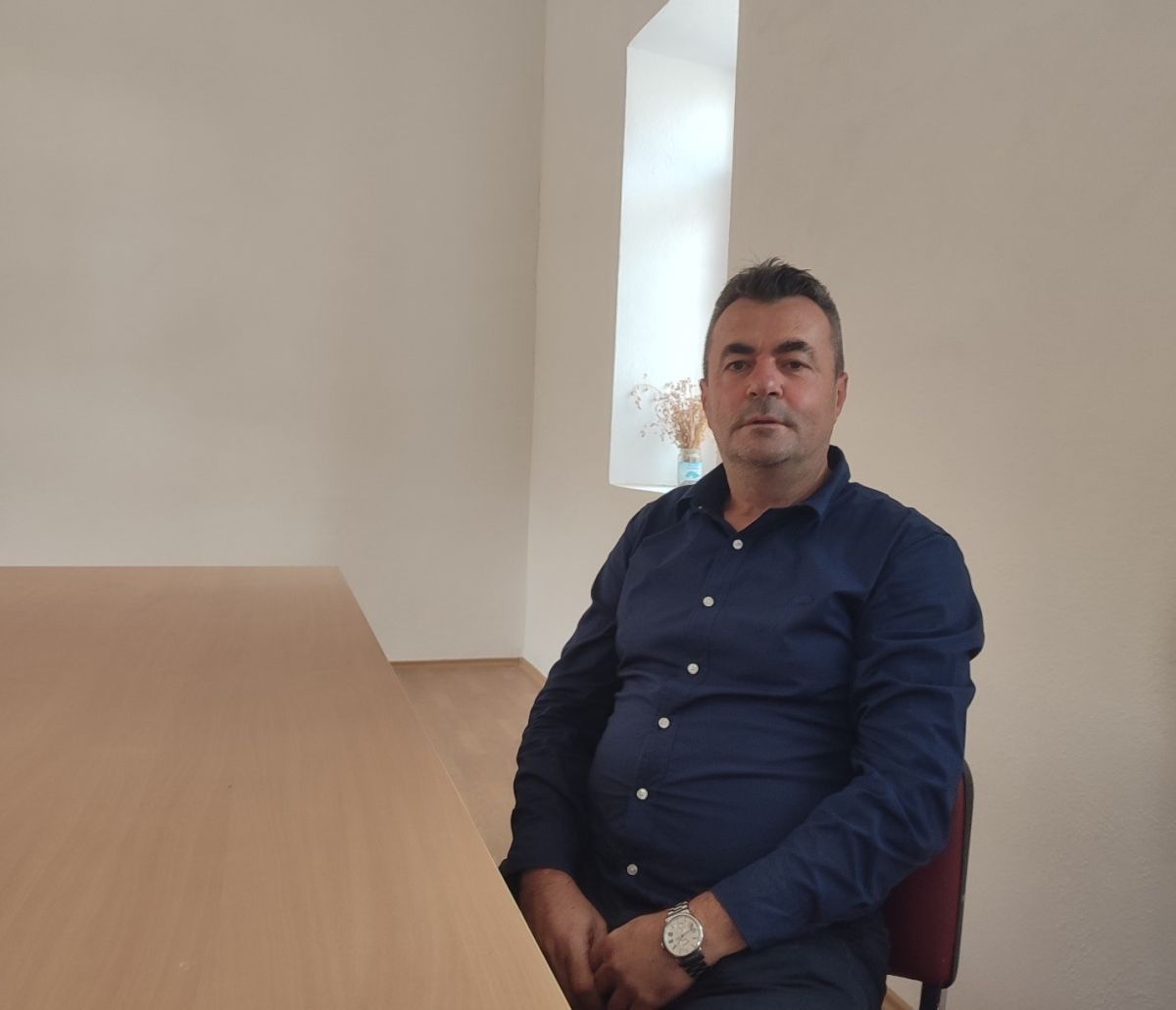
However, a sustainable return requires much more than good neighbourly relations. A member of the local assembly, Džemal Šendro, points out that the key issue is related to the needs of the returnees and daily life of these persons in a municipality from which most inhabitants go to work to Mostar and other cities.
According to him, systematic assistance to returnees is provided only by the Federation, which is insufficient without the involvement of other government levels. There are some improvements, but everything is extremely slow. The economic and social situation is difficult.
”There were also issues with the status of displaced persons. In 2013, the obligation to pay taxes and contributions was introduced, although we are basically still displaced persons, until a larger number of persons returns. We fought to improve the situation, changed our IDs, did our best to stay here”, Šendro says for Impuls.
He points out that this status of displaced persons is the key reason why the assembly of the municipality has been monoethnic for years.
All these issues do not encourage people to return.
Džemal Šendro; Photo: Impuls
”The number of returnees is very small. Unfortunately, there are no Bosniak children in Nevesinje – no child goes to the local school. A family in the village Hrušta has four children, but they send them to Mostar. And that is devastating. Also, there are almost no employments in the public sector. No administrative positions are held by Bosniaks”, Šendro says.
He also says that the safety of returnees is satisfactory and that people do feel safe, irrespective of everything that happened here during the war, such as serious crimes. Insufficient processing of such crimes does cause concern and leaves a bitter taste.
Our interlocutors agree that in the daily life, their relations with the neighbours function well. People work, go to Mostar, come back, and life somehow continues. However, in order for the return to be sustainable, it is necessary to invest much more, to provide employment, education and systematic support. In a contrary case, the town and villages around it will stay empty.
Symbolism: Minaret and bell tower
At the location itself, the Dugalića Mosque is part of a special symbolism that speaks about centuries of coexistence among people living in this place. Next to the mosque, there is a clock tower that dominates the centre. It has not been damaged, but the ravages of time have taken their toll, so that the clock tower is reconstructed together with the mosque.
A street only 2-3 meters wide separates the yard of the mosque from the gate of the Orthodox Church of the Ascension of Christ. Within an area of twenty meters, there is a bell tower, minaret and a clock tower. In Nevesinje, people frequently say that these are the closest minaret and bell tower in Bosnia and Herzegovina, and some even claim in the Balkans. This was also confirmed by Čopelj Efendi.
According to a legend, which everyone here will insist is undeniable truth, the family Dugalić gifted the land on which the church was built. There is no written evidence of this.
Documents show that the mosque was built in 1515, which makes it one of the oldest mosques. It was built by Haji Velijudin Bakrač, so that it was named after him. It was damaged during the uprising Nevesinjska puška in the period from 1875 to 1878, so that it required reconstruction. It was reconstructed by Hadžo Dugalić in the 1880s, and it has borne the current name ever since. Archpriest Milutin Govedarica also spoke about the connection between the church and the mosque and the symbolism during the consecration of the church in 1887, stating that they constituted a ”sublime monument of religious tolerance and brotherly unity of all tribes and religions” (Monograph ”Zlatno polje”. Hasan Eminović, Mostar 2018).
The text was co-authored in cooperation with the Pro Peace BiH.